
Overview
Oil Conditioning Planned Around Your Transformer
The amount of oil inside a transformer is only one part of selecting a filtration plant. Its starting condition, required output quality, and available maintenance time also influence the choice.
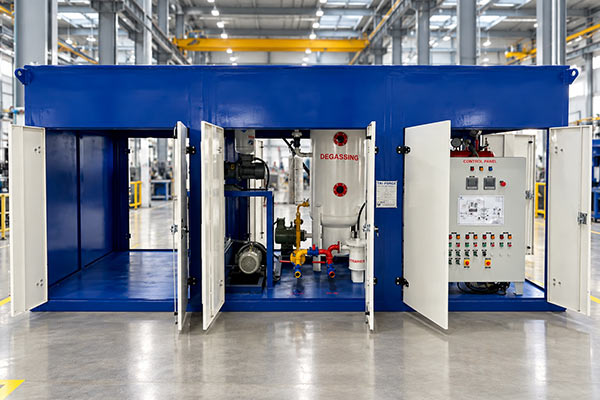
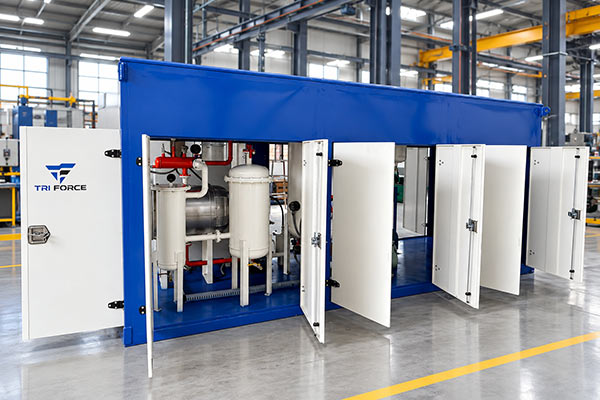
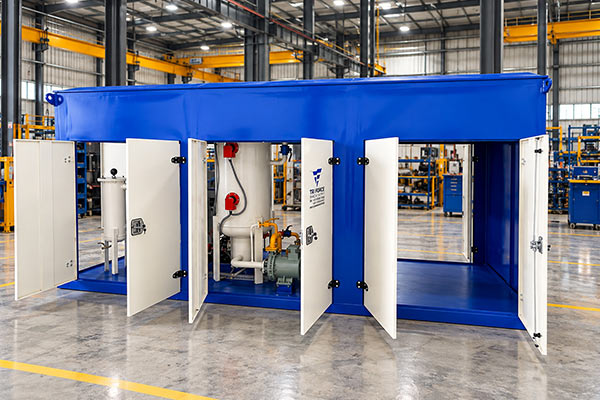
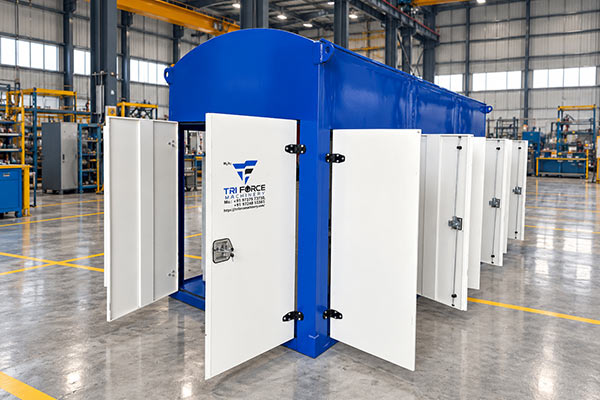
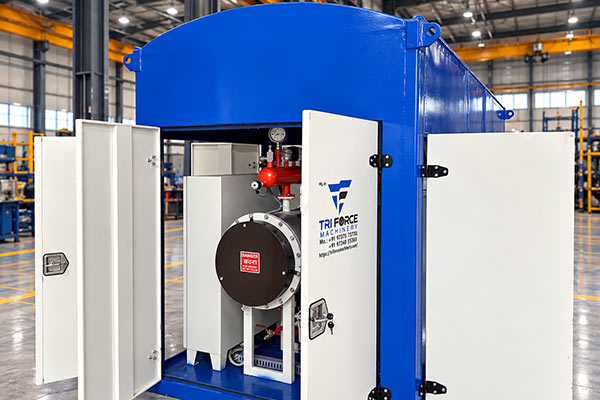
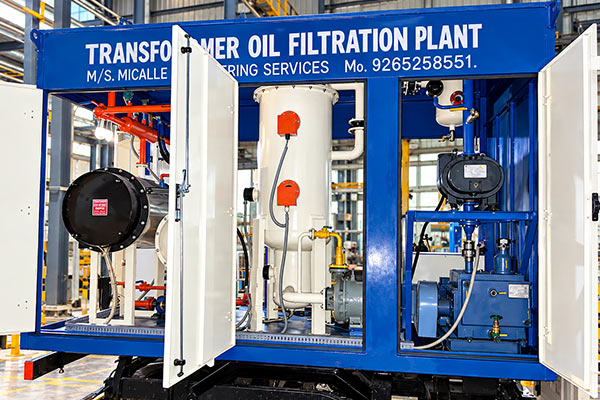
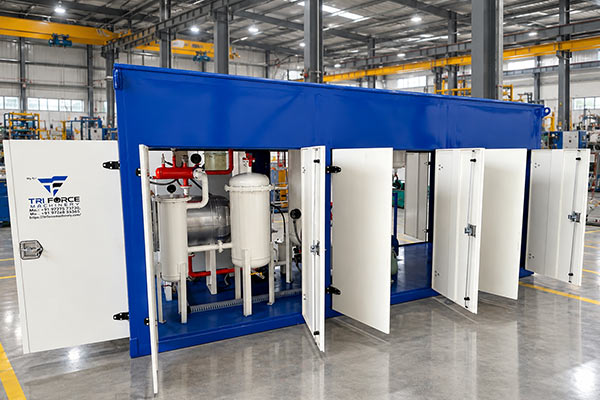
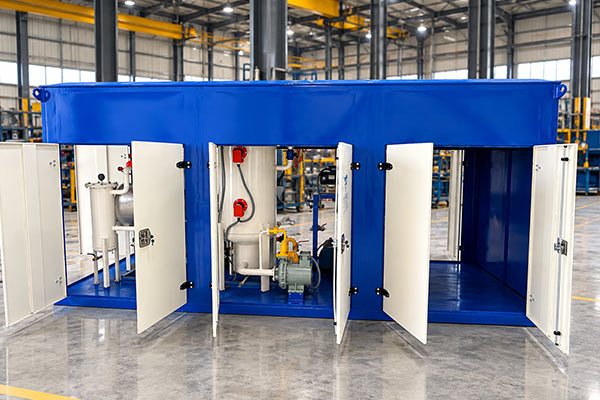
Tri Force Machinery manufactures transformer oil filtration equipment in Ahmedabad, Gujarat. The ultra high vacuum range combines oil filtration with vacuum treatment, allowing moisture and dissolved gases to be addressed alongside solid contamination.
This equipment can be considered when a maintenance team needs to process substantial oil quantities or meet a specified oil conditioning target. Selection should begin with the oil test report and the transformer’s maintenance requirements.
Defined Treatment Objectives
Lower moisture content | Reduced dissolved gases | Cleaner insulating oil
Transformer Oil Treatment Functions
Address Different Contaminants Through the Appropriate Process
Water, dissolved gas, and suspended particles behave differently inside insulating oil. Each requires a suitable treatment method.
Moisture Extraction
Vacuum dehydration encourages water to leave the oil as vapour. Treatment performance depends on operating conditions and the amount of moisture present at the start.
Dissolved Gas Separation
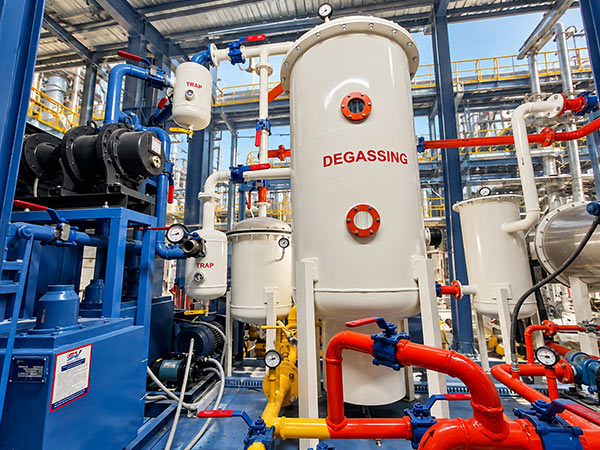
The degassing section releases gases from the oil under reduced pressure. Tri Force Machinery offers two stage and three stage degassing column configurations for this product range.
Suspended Particle Removal
Filter elements capture solid contamination as oil passes through the filtration circuit. Element selection and condition influence how the system performs during a job.
Oil Purification Process
Solid contaminants are removed through fine filtration, helping maintain insulating oil cleanliness and supporting reliable transformer performance.
Technical Specifications
Published Oil Conditioning Figures
Equipment Details
These figures reproduce Tri Force Machinery published product data. Actual output depends on incoming oil condition, temperature, vacuum conditions, flow rate, and processing duration. Confirm the number of passes and test methods when agreeing on performance requirements. The published micron rating does not replace an oil cleanliness test.
What Sets It Apart
Capacity for Substantial Oil Volumes
The available flow range allows buyers to consider equipment for different oil quantities. A suitable capacity balances the maintenance schedule with the required treatment result.
Two Degassing Column Choices
Two stage and three stage versions provide configuration options. The proposed arrangement should be assessed against the oil condition and required operating performance..
Moisture and Gas Treatment Together
Vacuum treatment addresses moisture and dissolved gases within the oil conditioning process. This gives maintenance teams a way to treat more than suspended contamination alone.
Industrial Construction
Tri Force Machinery lists high strength and corrosion resistance among the equipment’s construction features. Material selection and site exposure requirements can be discussed during quotation.
Results That Can Be Checked
Moisture content, dissolved gas content, and breakdown voltage provide measurable reference points. Comparing properly collected samples helps assess the change in oil condition.
Configuration Discussed Before Purchase
Tri Force Machinery offers customization across its transformer oil filtration range. Buyers can submit their specifications so the proposed machine can be reviewed against the actual job.
Working Principle
How the Oil Conditioning Process Is Managed
The following stages explain the treatment approach. The final equipment circuit and operating sequence depend on the selected configuration.
Step 1
Review the Incoming Oil
Available laboratory results establish the starting condition. The maintenance team defines the required moisture level, breakdown voltage, and other acceptance checks.
Step 2
Establish Oil Flow
Oil enters the treatment circuit through the connected inlet arrangement. Flow must suit the machine and the operating conditions agreed for the job.
Step 3
Apply Controlled Heating
Heating prepares the oil for treatment and supports moisture extraction. The operating temperature should follow the approved machine instructions and oil requirements.
Step 4
Perform Vacuum Treatment
Reduced pressure helps separate moisture and dissolved gases from the oil. Conditions in the treatment section influence the result.
Step 5
Filter Suspended Contamination
Oil passes through the specified filtration arrangement to remove solid particles. Filter condition must be monitored during processing.
Step 6
Sample and Check the Output
Treated oil is sampled using the required procedure. Test results determine whether the agreed target has been reached or further processing is needed.
Applications
Where This Equipment Can Be Considered
Generating Stations
Used during transformer production and oil filling processes.Power plant maintenance teams can assess the machine for conditioning oil used in their oil-filled transformers.
Transmission and Distribution Substations
Substation projects may require oil treatment during planned servicing, equipment preparation, or repair work.
Transformer Production Facilities
Manufacturers can discuss oil processing requirements associated with transformer assembly and filling procedures.
Industrial Electrical Installations
Facilities operating substantial oil-filled transformers can select treatment equipment around oil volume and maintenance access.
Transformer Service Workshops
Repair and service companies can consider the machine for oil conditioning jobs that require higher processing capacity.
Industries and Facilities
Supporting Sites That Operate Oil-Filled Transformers
Potential applications include power generation, electrical utilities, steel production, cement manufacturing, chemical processing, and heavy engineering facilities.
The deciding factor is the transformer oil treatment requirement. Oil type, quantity, contamination level, and acceptance criteria should guide machine selection for each site.
Benefits of Planned Oil Conditioning
Address Moisture Before It Becomes a Larger Maintenance Concern
Reducing water in insulating oil helps improve its condition. Oil treatment should form part of a wider maintenance programme that also considers the transformer’s solid insulation.
Improve the Condition of the Insulating Medium
Removing moisture and particles can improve oil breakdown voltage. Laboratory checks are needed to confirm the result for the oil being processed.
Organise Larger Treatment Jobs
A suitable flow capacity helps teams plan oil handling and processing work within an available maintenance window.
Make Decisions From Test Results
Before and after samples provide a stronger basis for accepting the work than colour or appearance alone.
Assess Whether Further Treatment Is Required
Oil conditioning can address moisture, gases, and particles. If testing identifies excessive acidity or other ageing concerns, additional assessment may be needed before deciding on reclamation or replacement.
Why Choose Tri Force Machinery?
Equipment Selection Based on Your Specification
Send the transformer details, oil quantity, and treatment targets. Tri Force Machinery can discuss a configuration against the information provided.
Related Equipment From One Manufacturer
Tri Force Machinery range also includes dry air generator plants, transformer evacuation systems, oil storage tanks, and sampling bottles. These products support different parts of transformer and oil handling work.
Alternatives for Temporary Requirements
Customers arranging a specific maintenance job can ask about rental equipment and on-site oil filtration services. Availability and the service scope should be confirmed for the project.
Maintenance and Spare Support
Tri Force Machinery lists annual maintenance contracts, filtration machine repair and overhauling, and spare supplies among its services. Buyers can discuss these requirements alongside the equipment quotation.
Frequently Asked Questions
The machine conditions transformer oil by reducing moisture, dissolved gases, and solid particles. Its suitability depends on the oil type, starting condition, and required output quality.
Tri Force Machinery publishes a capacity range of 3,000–18,000 LPH for this product. The proposed operating flow should be confirmed against the treatment target.
One pass should not be assumed. Incoming oil condition, operating temperature, vacuum conditions, and flow rate influence the result. Confirm the processing and testing conditions with Tri Force Machinery.
Filtration does not automatically reverse every form of oil ageing. Laboratory results help determine whether conditioning is sufficient or whether reclamation or replacement needs consideration.
Tri Force Machinery lists different degassing column configurations. Ask for the proposed arrangement and performance conditions in the quotation so the versions can be compared against the same requirement.
Provide the total oil volume, available processing time, current oil test report, and required final condition. Nominal flow capacity alone does not establish the time needed to complete the treatment.
Send the required flow range, oil quantity, transformer application, site power supply, installation location, and acceptance criteria. Include rental, commissioning, or service requirements where applicable.
Request an Ultra High Vacuum Oil Filtration Proposal
Planning a transformer oil conditioning project? Share the available test results, quantity of oil, and time allowed for treatment with Tri Force Machinery.
Ask for a proposal that identifies the machine capacity, degassing configuration, included equipment, and expected operating conditions. Your team can then review the offer against a clear technical requirement.